
To analyze a crypto project’s GitHub activity, find its official GitHub organization, pick out the core repositories, then check four things: how often code is committed, how many independent developers contribute, how issues and pull requests are handled, and whether releases and security audits are published.
GitHub is one of the few places where a crypto project’s work is public and timestamped. A whitepaper can promise anything; a repository shows whether anyone is building it. This guide walks through the checks step by step, shows them on four real repositories, lists the numbers that mislead, and explains how traders watch GitHub for projects that haven’t announced a token yet. It describes a research method and is not investment advice.
Why GitHub Activity Matters in Crypto Fundamental Analysis
Most crypto projects are software first. The token only has lasting value if the network, protocol or app behind it keeps working, gets fixed when it breaks, and ships what the roadmap promised. GitHub lets you check that directly instead of relying on announcements.
It answers three questions:
- Is anyone working on it? Recent commits, merged pull requests and releases show the project is alive.
- Who is working on it? The number of independent contributors tells you whether the project depends on one or two people. Pair it with the checks in assessing a crypto project’s team.
- How carefully? Code review, tests, documentation and audits show whether the team treats security seriously.
GitHub activity is one input. A busy repository does not make a token a good investment, and some solid projects build in other places, such as GitLab or private repositories with public releases.
How to Analyze a Crypto Project’s GitHub Activity, Step by Step
1. Find the official GitHub organization
Start from the project’s official website or documentation and follow its GitHub link. Don’t search GitHub by name first: scammers create look-alike accounts and repositories, and some fake repositories contain malware aimed at crypto wallets. Check that the organization links back to the official website.

2. Identify the core repositories
An organization can hold dozens of repositories, and most are not the product. Find the ones that matter: the node or client software for a blockchain, the smart contracts for a DeFi protocol, the SDK for a developer platform. Websites, documentation and old experiments say little about development health.
Also note whether a repository is labelled “Forked from”. Litecoin’s main repository, shown above, is a fork of Bitcoin’s. That is normal and public, but a fork inherits the original project’s whole history, so its lifetime commit count says nothing about the new team’s work.
3. Check commit frequency and recency
Open the repository’s Insights tab. Pulse summarizes the last week or month, Commits shows weekly commits for the past year, and Code frequency shows lines added and removed. Look for steady work rather than one burst, and compare it with the roadmap. Months without a commit to a core repository are a red flag unless the project says the code is finished.
4. Count independent contributors
The Contributors view shows who wrote the commits. A project where one person writes nearly all the code carries a “bus factor” risk: if that developer leaves, development stops. A broad base of contributors, including people outside the founding team, is a stronger sign.
5. Look at issues and pull requests
Open and closed issues show what users report and how fast the team responds. Pull requests show whether code is reviewed before it is merged: look for comments, requested changes and approvals from someone other than the author. A repository where the same person opens and merges every change without review is riskier.
6. Check releases, documentation and tests
Tagged releases with release notes show the team ships working versions, not just commits. A clear README, setup instructions and up-to-date documentation make the code usable by others. A test folder and automated checks on pull requests suggest the team catches bugs before release.
7. Look for audits and verified contracts
For smart contract projects, look for security audit reports from named firms, often linked from the documentation or kept in an audits folder, and check whether the findings were fixed. Then check that the deployed contract matches the public code: on Etherscan and similar explorers, a verified contract shows its source code. An unverified contract means you can’t see what you are interacting with, which is a serious warning sign.
Worked Example: Four Core Repositories Compared
To show how much the numbers vary, we pulled public data from the GitHub API for four core client repositories on 20 October 2026. Commits and authors cover the 90 days since 22 July 2026 on each repository’s default branch.
| Repository | Commits (90 days) | Commit authors (90 days) | Stars | Latest release found |
|---|---|---|---|---|
| bitcoin/bitcoin (Bitcoin Core) | 1,251 | 91 | 90,451 | v29.4, 10 Jul 2026 |
| anza-xyz/agave (Solana validator client) | 1,167 | 86 | 1,959 | v4.3.2, 15 Oct 2026 |
| ethereum/go-ethereum (Geth) | 232 | 59 | 51,419 | v1.17.8, 8 Oct 2026 |
| IntersectMBO/cardano-node | 223 | 13 | 3,174 | 11.1.3, 29 Sep 2026 |
What the comparison shows:
- Stars measure attention, not work. Agave has about 2,000 stars yet nearly as many commits as Bitcoin Core with 90,000. Solana’s validator client moved to this repository in 2024, so its stars are young.
- Commit counts depend on workflow. Bitcoin Core merges each pull request with a merge commit, which adds to the count. Geth’s lower number does not mean less development; compare trends within one project rather than raw totals across projects.
- One repository is rarely the whole project. cardano-node shows 13 authors because much of Cardano’s consensus and ledger code lives in separate repositories. Count across all core repositories before judging.
Figures are a snapshot and change daily. They illustrate the method and are not a ranking of these networks.
GitHub Metrics That Can Mislead
Activity data is easy to inflate. Watch for:
- Bought stars and forks. Stars and forks can be purchased. Thousands of stars on a repository with few issues, few contributors and little code are suspicious.
- Cosmetic commits. Typo fixes, README edits, dependency bumps and auto-generated files raise commit counts without building anything. Open a sample of recent commits and read what changed.
- Bot activity. Automated accounts that update dependencies or run releases can account for a large share of commits.
- Copied code. A project that forked another chain and changed little may look busy if you count inherited history. Compare it with the original repository.
- Activity in the wrong place. Busy website or documentation repositories while the core code sits still is a warning sign.
Tools That Track Crypto Developer Activity
Checking repositories one by one is slow. These tools aggregate GitHub data across many projects:
- Santiment offers a development activity metric. It counts GitHub events rather than commits, ignores non-development events, and does not credit a fork with the history it inherited, which makes projects easier to compare.
- Electric Capital Developer Report publishes research on developer counts across crypto ecosystems.
- CryptoMiso and Cryptometheus rank cryptocurrencies by GitHub development activity.
- OSS Insight shows activity charts for any public GitHub repository.
Each tool maps tokens to repositories its own way and may miss some. Use them to shortlist, then check the repositories yourself.
How to Monitor GitHub for Early or Unannounced Crypto Projects
Many teams build in public for months before a token, testnet or marketing launch. Traders who research early-stage projects watch GitHub for those signals. These are common methods:
-
Search new repositories by topic and date. GitHub’s repository search supports qualifiers such as
topic:solana created:>2026-09-01for new Solana-tagged repositories,pushed:>for recent activity andstars:>20to filter out empty experiments. -
Search for framework files. Code search (you need to be signed in) finds the configuration files that smart contract projects create, such as
path:foundry.tomlorpath:hardhat.config.tsfor EVM chains,path:Anchor.tomlfor Solana andpath:Move.tomlfor Aptos and Sui. - Follow developers and organizations. Experienced protocol developers often start or join new organizations before anything is announced. Following them on GitHub shows their new public repositories and stars in your feed.
- Watch releases. Use Watch → Custom → Releases on repositories you track to get a notification when a team tags its first release.
- Watch forks of major protocols. After a big protocol release, new forks with heavy changes can be teams building competing or derived products.
Treat anything you find this way as unverified. Most early repositories never become a live project, a repository is not a token, and nothing on GitHub tells you when or whether one will launch. Never run code from an unknown repository on a machine that holds wallet keys, and never connect a wallet to a site you found only through a repository. Fake crypto projects on GitHub are a known malware channel.
Checks Beyond GitHub
Code analysis works best alongside token-level checks, especially for new tokens:
- Check the token on an explorer. Confirm the contract address from the official website, check that the contract is verified, and read any warnings the explorer shows. If a token is missing from established data sites such as CoinGecko, be extra careful.
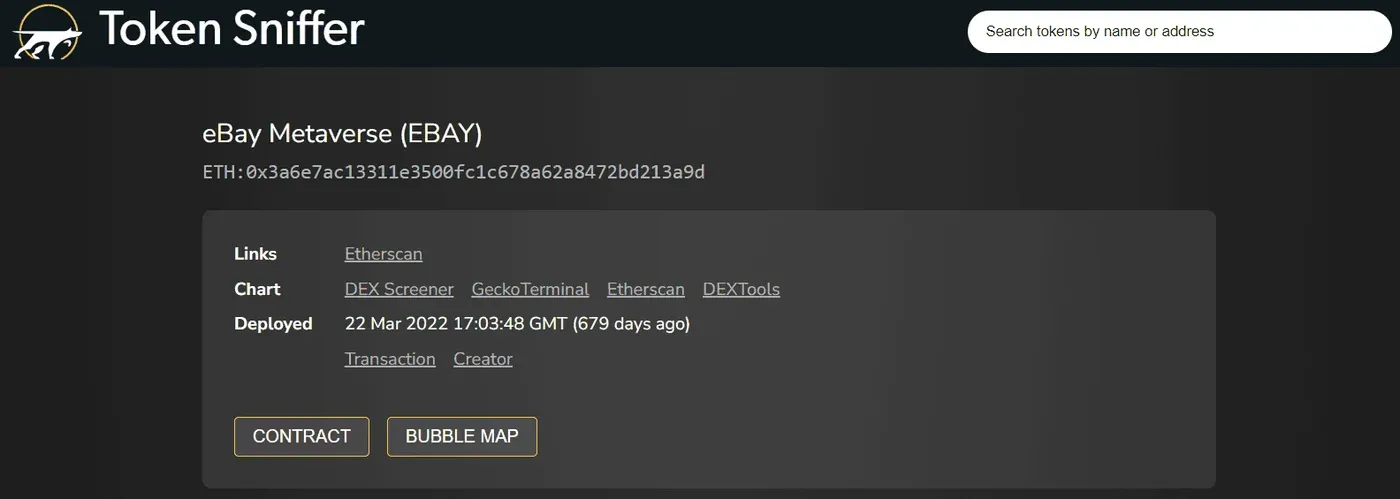
- Run an automated contract scan. Token Sniffer scans a token’s contract and gives it a score out of 100; a lower score means more risk factors were found.
- Test for a honeypot. A honeypot token lets you buy but blocks selling, or taxes sales so heavily that you can’t exit. Honeypot.is simulates a buy and a sell to flag this.
- Check where it trades. A token on a single small exchange or liquidity pool carries more risk than one with liquid markets on several established exchanges, though listings alone don’t prove quality.
For a structured approach to the rest of the picture, see our guides to tokenomics and token distribution and the best tools for fundamental analysis.
Following a Project After It Lists
Once a project you have researched lists on an exchange, development news can move its price. In Altrady you can add the coin to a watchlist and set price alerts across your connected exchanges, and practise your plan with paper trading before risking real funds.
Frequently Asked Questions
How do you analyze a crypto project’s GitHub activity?
Start from the project’s official website to find its real GitHub organization, then focus on the core repositories. Check commit frequency over the past year, the number of independent contributors, how issues and pull requests are reviewed, and whether the team publishes releases, tests and audit reports.
Is high GitHub activity a good sign for a crypto project?
Steady activity in core repositories is a positive sign that people are building the product. It doesn’t prove the code is good or that the token will do well, and raw numbers can be inflated by cosmetic commits, bots or inherited fork history. Read a sample of recent changes before trusting the count.
How can you find crypto projects early on GitHub?
Traders search new repositories by topic and creation date, search for smart contract framework files such as foundry.toml or Anchor.toml, follow known protocol developers, and watch repositories for their first release. Most early repositories never launch, so treat finds as unverified and never run their code on a machine with wallet keys.
Can GitHub activity be faked?
Yes. Stars and forks can be bought, commits can be split into many trivial changes, and bots can generate activity. Compare stars with real contributors and issues, and open recent commits to see whether they change working code.
Which tools track crypto developer activity?
Santiment, the Electric Capital Developer Report, CryptoMiso and Cryptometheus aggregate GitHub activity across crypto projects, and OSS Insight charts any public repository. Each maps tokens to repositories differently, so use them to build a shortlist and then check the repositories yourself.
Conclusion
A crypto project’s GitHub shows whether its team is building, who is doing the work and how carefully. The useful signals are steady commits to core repositories, several independent contributors, reviewed pull requests, regular releases and published audits. Stars, forks and raw commit totals are easy to inflate, so read the code history rather than the counters.
Combine GitHub checks with the team, roadmap and tokenomics research covered elsewhere in this fundamental analysis guide for a fuller view of a project’s health.
